
Understanding baking chemistry basics transforms you from recipe follower to confident baker. This fundamental science explains why cakes rise, cookies spread, and bread develops its signature crumb. By grasping how ingredients interact at the molecular level, you’ll troubleshoot failures and create consistently perfect baked goods with scientific precision.
Have you ever wondered why your cake did not rise, the role of butter in cake texture, or the role of baking soda in baking? This guide will guide you through the science of baking, which has been presented in simple and friendly terms.
In the long run, you are going to not only be a better follower of recipes but also know the real situation in your oven.
The Chemistry of Baking
1. Flour: The Framework of Structure
Flour is not just a powder, and it is the foundation of the majority of baked products. The incorporation of flour with liquid containing two proteins (glutenin and gliadin) forms gluten, which is the elastic net, trapping air that provides structure.
- In pastries and cakes: Excess gluten will result in thick or chewy ones.
- In bread: Strong gluten formation produces that light, bouncy texture we so greatly enjoy.
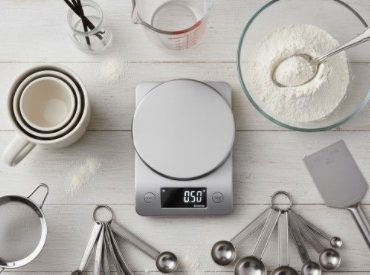
Hint: Flour should never be measured. Directly scooping out of the bag may squeeze it together and change your proportion to yield a dry or tough piece.
2. Sugar: More Than Just Sweetness
Sugar does not just provide flavor, it influences the texture, moisture and color.
- It softens baked goods by inhibiting the formation of gluten.
- It preserves moisture, thereby making the cakes softer.
- It is caramelized during baking, which produces that golden-brown look and rich flavor.
And also, we cannot forget about the aeration properties of sugar, when mixed with butter, it captures little air bubbles, which are spread out during baking, making cakes rise.
3. Eggs: The Multi-Tasking Ingredient
Bakery superheroes are eggs. They perform the function of binder, leavening agents and emulsifiers simultaneously.
- Egg whites provide stability and structure.
- Egg yolks contribute to richness, color and smoothness.
- Combined, they balance the moisture and aid in the emulsification of fats and liquids to give a homogenous texture.
Excessive eggs will result in baked goods being too rubbery, and excessive use will cause your dessert to collapse.
4. Fats: The Texture Controller
Butter, oil, and shortening, all of the fats, are important in tenderness.
Fats also cover flour particles, which inhibit gluten formation and produce a soft crumb.
They are also flavored and assist in capturing air with creamed sugar and give lift and lightness.
Science fact: Solid fats (such as butter) entrap water better than liquid oils and that is why cookies baked with oil are not as airy.
5. Leavening Agents: The Science of Rise
It is the leavening agent that helps your baked goods to rise. They add gas bubbles, which swell during the heat of the oven.
- The sodium bicarbonate (baking soda) requires the presence of an acid (such as buttermilk or vinegar) in order to react and create carbon dioxide.
- Baking powder is a compound that consists of an acid and a base and is activated by moisture and heat.
- Sugar is fermented by yeast to yield carbon dioxide and ethanol, which are employed primarily in bread.
The knowledge of the one to use (and in what quantity) is the key to obtaining the correct texture.
The Role of Heat: Turning Batter into Art
When batter or dough is placed in the oven, a series of scientific changes start:
1. Expansion Stage (0–100°C / 32–212°F)
The gas in the raising agents rises and any air bubbles that are trapped swell up; this is what causes your cake to rise.
2. Coagulation and Setting (100–180°C / 212–356°F)
Proteins containing gluten and eggs solidify, thereby fixing the structure. The gelatinization of starches makes liquids transform into a crumb.
3. Browning and Flavor Development (Above 150°C / 300°F)
The Maillard reaction activates a chemical reaction between sugars and amino acids, which forms flavor, aroma and that golden crust.
This is the reason cookies become brown and bread crusts form a good flavor rather than being pale.
The Importance of Temperature Control
There is no degree that matters in baking. Whereas in cooking, you can look inside and know instinctively whether the sauce is boiling at the appropriate temperature, or you can taste it and see by touch, in baking, you have no idea.
Ingredients are also important, depending on the room temperature. Too cold butter will not cream and eggs taken right out of the fridge will make the batter curdle.
Hint: It is important to preheat your oven, at least 15 minutes before baking. Stability heat = stability results.
The Science of Mixing: How Techniques Change Texture
It is equally important that you combine ingredients and not the ingredients themselves.
1. Creaming Method
Used for cakes and cookies, this incorporates air for a light texture. Butter and sugar are beaten until fluffy, creating the foundation for lift.
2. Muffin Method
Wet and dry ingredients are mixed separately, then gently combined to avoid overdeveloping gluten. Perfect for muffins and quick breads.
3. Whisking Method
Used in sponge cakes or meringues, relies on whipping air into eggs for natural leavening.
Overmixing or undermixing can significantly impact texture, so it’s essential to follow mixing instructions closely.
The Hidden Chemistry of Salt and Acids
Salt may not seem important in sweets, but it’s vital. It balances flavor, strengthens gluten, and controls yeast activity.
Acids (like lemon juice or vinegar) can react with baking soda for leavening or brighten the overall taste.
Even a pinch makes a difference; think of salt as the flavor amplifier of baking.
Water and Moisture: The Unsung Heroes
Water activates gluten, dissolves sugar, and allows leavening reactions to occur.
Too much = soggy texture. Too little = dry crumb.
The key is balance, controlling how moisture moves through your recipe. That’s why measuring liquids accurately is so essential.
FAQs
1. What is the most significant baking reaction?
One of the most important reactions is the Maillard reaction which produces the flavor and browning of baked goods. And that is why bread crusts and cookies taste and smell so good in their golden brown.
2. Why does baking soda require an acidic substance?
Sodium bicarbonate is a base that is baking soda. It requires an acid (yogurt, buttermilk, lemon juice) to be set free and combined with carbon dioxide gas, causing the batter to rise. It will not react well without a bitter acid.
3. What should I do to be more consistent in baking?
It is important to weigh carefully, store ingredients at room temperature and mix as per instructions. Minor variations in temperature or process can turn the result completely in another way; baking is a process that is really rewarding to be precise.
Final Thoughts
Baking is not simply a matter of mixing and waiting, but rather a process of chemistry. All responses and ingredients and all temperature variations are part of a gorgeous metamorphosis of plain batter to golden glory.
Once you know the art of baking, you bake confidently. You will begin to forecast ingredient behavior and will modify textures and experiment without being afraid.
And so when your cookies spread excessively, or your cake is too heavy, you need not feel that you are failing; you are learning the language of science. And when you have it perfected, every recipe is your own sweet experiment.
At Lorraine’s Cake Shoppe, we have the belief that baking knowledge should be shared- since when learning is combined with creation, every bite is a story.