
Baking heat transformation is the silent miracle that lifts, sets, browns, and flavors your cakes and breads – understanding these 6 stages will change the way you bake forever. Learning how to transform heat in baking, or how heat alters the properties of ingredients on a molecular scale, is among the best secrets of making perfect pastries, breads and cakes.
The crumb, soft and airy, to the crisp golden crust, Each delicious detail is created by fire. However, what exactly goes on in the oven? Why does dough rise, crust develops and sugar brown? The solutions are in the science of heat change, an invisible ballet of chemistry, physics and time.
Now, let us see an incredible adventure of what happens to baked goods when they are placed in the oven.
The Moment Heat Meets Batter: Phase One — Expansion
As soon as a pan goes into the oven, heat begins its work instantly. The first transformation is expansion, the point where air, steam, and gases inside your batter or dough start to expand.
At about 100°F (38°C), butter softens, and trapped air pockets begin to enlarge. As the temperature continues to climb, moisture in the batter converts to steam, which further inflates the mixture.
Meanwhile, leavening agents like baking powder and baking soda release carbon dioxide, adding more lift. This early stage of baking heat transformation gives rise to volume and lightness, essential in cakes, muffins, and quick breads.
Tip: If your oven isn’t preheated, this delicate stage happens too slowly, and your baked goods may collapse before structure sets.
Phase Two — Protein Coagulation: Setting the Structure
Once internal temperatures reach around 140°F to 160°F (60°C–70°C), proteins from eggs and flour begin to coagulate, that is, they denature and bond together. This process turns soft, liquid batter into a stable, solid structure.
Think of it as the backbone of baking. Without this stage, cakes wouldn’t hold shape, and breads would deflate after rising.
The precision of this stage determines texture:
- Too little heat → a gummy or underbaked center.
- Too much heat → dryness or toughness.
Mastering this middle phase of baking heat transformation ensures every crumb is tender but strong enough to stand tall.
Phase Three — Starch Gelatinization: Soft Meets Solid
Between 150°F and 180°F (65°C–82°C), starch granules in flour absorb water and swell, a process called gelatinization. This thickens the batter and locks moisture into the crumb.
At this point, the structure of your baked goods is almost complete. The crumb of a cake sets, the interior of bread becomes soft, and pastries develop body.
Starch gelatinization is one reason measuring ingredients accurately (and using the right type of flour) is vital. Too little water, and gelatinization can’t occur fully; too much, and the structure collapses.
In short: starch gives baked goods their softness; heat gives them their strength.
Phase Four — Evaporation and Moisture Balance
As the oven temperature climbs past 200°F (93°C), water begins to evaporate rapidly. Steam escapes, creating small air pockets that contribute to lightness and crumb texture.
However, too much evaporation leads to dryness. This is why baking times and oven placement are critical.
- Cakes and muffins benefit from moderate heat to prevent quick drying.
- Breads and pies thrive at higher temperatures to create crisp crusts and trap internal steam.
In the grand ballet of baking heat transformation, evaporation is like the fine-tuning stage, balancing moisture for ideal texture.
Phase Five — The Maillard Reaction: Flavor Awakening
At around 285°F (140°C), a magical reaction begins between proteins and sugars: the Maillard reaction. This complex chemical dance creates hundreds of new flavor compounds and that irresistible golden-brown hue.
This is what gives cookies their nutty aroma, bread crusts their richness, and pastries their deep, caramelized notes.
Unlike caramelization (which is sugar-only), the Maillard reaction involves amino acids and reducing sugars working together to build complexity.
Every “baked” flavor you love, from a croissant’s buttery layers to a brownie’s chewy edge, comes from this essential step of baking heat transformation.
Phase Six — Caramelization: The Golden Finish
When the temperature hits 320°F (160°C) or higher, caramelization takes center stage. This process involves the breakdown of sugar molecules, creating amber colors, toasty aromas, and rich flavors.
Caramelization is the final flourish that makes baked goods look and taste irresistible:
- It gives cookies their crisp edges.
- It turns the tops of cakes a lovely golden brown.
- It adds shine and aroma to pastries and tarts.
This stage is delicate, too little heat and your bake looks pale; too much, and bitterness replaces sweetness. Controlling caramelization is the mark of an experienced baker.
How Oven Heat Actually Works
Understanding how ovens distribute heat is key to controlling baking heat transformation. There are three main types of heat transfer:
- Conduction – Heat moves directly from the baking pan to the batter. This sets the bottom and edges first.
- Convection – Heat circulates through the air, baking food evenly. Convection ovens use fans to enhance this.
- Radiation – Heat emitted from oven walls or coils cooks the surface, helping with browning.
Each type interacts differently depending on what you’re baking. Cookies love conduction. Breads need convection for even rising. Delicate desserts like soufflés depend on balanced radiant heat to avoid cracks.
The Importance of Oven Placement
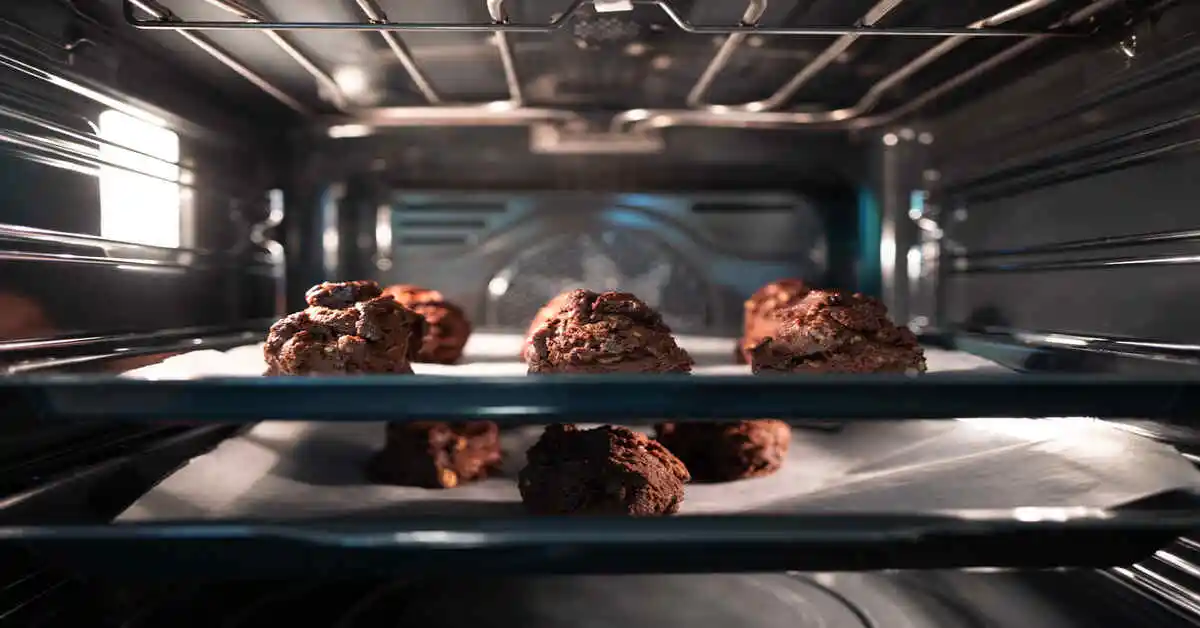
The middle rack isn’t just tradition, it’s science. In most ovens, the middle allows for even exposure to both top and bottom heat.
- Top rack: More radiant heat, better for broiling or browning.
- Bottom rack: Best for crusty breads or pizzas.
- Center rack: Ideal balance for cakes, cookies, and pastries.
Even small placement changes affect how baking heat transformation unfolds. A pan too close to the top may brown too fast, while one too low may cook unevenly.
Preheating: The Unsung Hero
Preheating is one of the largest baking mistakes. Structure, air and rise are formed during the initial few minutes in the oven. Malfunctioning leavening agents release gases prematurely without the right temperature at the beginning resulting in a dense or flat product.
Preheating stabilizes the oven conditions to match the recipes as per the requirements of the recipe, essential during the uniform transformation of heat into baking.
Pro tip: When preheating, it is always a good idea to heat at least 15 minutes or even more when the oven is big or the batter is thick.
Baking Temperature and Time: The Art of Balance
Every baked good has a “sweet spot” temperature:
- Cookies: 325°F–350°F for chewiness or crispness.
- Cakes: 325°F–375°F for even rising.
- Breads: 400°F–475°F for crust formation.
- Pastries: 375°F–425°F for flakiness and lift.
Baking too hot causes premature browning before the inside cooks. Too cool, and the result may be pale, heavy, or underdone.
In professional baking, chefs use thermometers and even double-bake techniques to ensure internal temperature perfection.
Steam and Heat: Partners in Perfection
Steam is important in the transformation of heat in baking especially in pastries and bread. At an early stage, the crusts are softened to achieve maximum oven spring (the last rise). The steam is lost and the crusts become beautifully hard as the bake is continued.
That is why sometimes bakers use water pans or spritz ovens in baking, such humidity regulation produces a more contrast between the crust and crumb.
Thermal Inertia: The After-Bake Effect
Even after you turn off the oven, heat continues to transform your bake. Residual heat, or thermal inertia, keeps internal cooking active for several minutes. This period allows:
- Carryover cooking to finish setting centers.
- Starch and protein to stabilize.
- Crusts to crisp slightly as moisture escapes.
It’s why recipes often say, “Let cool in the pan for 10 minutes.” Removing too early can cause collapse, while waiting too long may make the crust soggy.
Cooling: The Final Stage of Transformation
Baking is no more scientific than cooling. When the temperature decreases, steam is condensed and the structure is stabilized. Cooling racks aid in air flow, which avoids sogginess.
In sensitive products, such as cheesecakes or macarons, slow drying prevents cracks due to the quick contraction of products. In the case of crusty breads, it enables redistribution of moisture, which leaves the slices clean and even.
Yes, baking heat change does not stop at the oven door. It goes until your creation attains perfection in room temperature.
Common Baking Heat Mistakes (and Fixes)
- Cold Oven Starts: Always preheat. Cold starts ruin rise and texture.
- Overcrowded Oven: Air circulation is essential; bake in batches.
- Wrong Rack Placement: Follow recipe guidance for even heat.
- Door Peeking: Every open door drops oven temperature by 25–50°F.
- Ignoring Hot Spots: Rotate pans halfway through to prevent uneven baking.
Small temperature errors can create big differences in final results. Awareness is half the battle.
Using Thermometers for Precision
Professional bakers swear by thermometers, not just for ovens, but for internal doneness too. A loaf of bread is done at about 190°F–210°F internally; a cake, at 200°F–205°F.
Since home ovens can be off by 25°F or more, an oven thermometer ensures consistency. Accurate heat equals predictable baking heat transformation, the foundation of perfect baking science.
How Heat Shapes Texture and Crust
This is the case with texture and crust being on the same side of the coin. A warm, slow heat yields soft crumbs. Strong, hot air develops crusty layers and caramel.
It is this juxtaposition, the tender interior expelling against the brittle exterior, that constitutes great baking. Every bite is a combination of textures that are only possible with the help of the accurate heat.
Understanding Convection vs. Conventional Baking
Convection Ovens:
- Faster, more even baking.
- Ideal for roasting, cookies, and multi-rack baking.
- Requires temperature reduction (by ~25°F).
Conventional Ovens:
- Gentler heat, better for cakes and delicate desserts.
- More predictable for home bakers.
Knowing which type of oven you have helps you adjust recipes for ideal baking heat transformation results every time.
Conclusion
The silent hero behind all the perfect bakes is the heat. Baking heat transformation is what transforms plain ingredients into a masterpiece of texture, taste and beauty since it is the process of tender growth until caramelizing the end result.
Learning to cook in the oven is not only a matter of following the recipes but also the forces of nature that engage with your masterpieces, which are invisible. When you understand the behavior of heat, you get the ability to bake without a plan, to make changes, adapt and invent.
And next time you open your oven door, take a moment and factor in the alchemy that occurs therein. You are not merely baking, you are also plotting one of the finest metamorphoses in the entire art of food.