
Achieving baking measurement accuracy is the non-negotiable foundation separating culinary triumphs from kitchen disappointments. Unlike cooking’s flexible improvisation, baking demands scientific precision where even minute measurement variances can dramatically alter texture, rise, and flavor balance. This meticulous approach to ingredient quantities ensures chemical reactions proceed correctly, structures set properly, and flavors harmonize perfectly—transforming simple recipes into consistently flawless creations through exacting measurement protocols.
Baking is chemistry, as opposed to cooking where it is possible to improvise the dish and add a pinch of this or a splash of that. All ingredients have their scientific functions, and any mistake in measurement may significantly change the outcome. This is why the accuracy of baking measurements is not only a wish but the basis of any successful recipe.
In this blog, we are going to discuss the importance of accuracy in baking, measuring ingredients the correct way, and how accuracy can make ordinary ingredients taste the same just to be prepared in a consistent and mouthwatering way.
The Science of Baking: Precision Creates Perfection
In its most basic form, baking is a set of chemical reactions. Combinations of ingredients are used in precise ratios to form texture, flavor and structure. Excess or lack of any one of the components may cause an imbalance.
Just imagine baking as a science. The percentage of flour to liquid is the determiner of the texture. Sugar influences the browning and moisture. Leavening agents such as baking soda and powder cannot be used correctly unless there is a particular acidic or neutral ingredient.
When accurate measurements are used, these reactions are in concert, they result in softened cakes, chew cookies, as well as flake pastries. The magic gets away when they are out of work.
Why Measurement Accuracy Matters
1. It Ensures Consistency
The most reliable bakers produce perfect results time after time, and their secret is baking measurement accuracy. Measuring correctly ensures that every batch tastes, rises, and browns the same. Consistency is what turns a one-time success into a signature recipe.
2. It Affects Texture and Structure
The texture of a baked good depends heavily on ratios. For example:
- Too much flour makes a cake dense and dry.
- Too little flour leads to collapse.
- Excess sugar causes spreading and weak structure.
- Incorrect liquid ratios can make dough sticky or too stiff.
A measuring mistake as small as one tablespoon can alter the entire structure.
3. It Impacts Chemical Reactions
Leavening agents, baking powder, baking soda, yeast require proper ratios in order to work. Excessive baking soda has an unpleasant flavor whereas insufficient causes no rise. Equally, acid and base (such as buttermilk and soda respectively) need to have the proper balance.
4. It Preserves Flavor Balance
Wrong measurements do not merely make a difference in the structure, they alter the flavor. Excess salt drowns out sweetness and additional sugar dilutes the nuances such as vanilla or citrus. Accuracy makes sure that there is harmony in taste and texture.
Dry vs. Wet Ingredients: The Key Differences
Not all ingredients are measured the same way. Understanding the difference between dry and wet measurement techniques is one of the first steps to achieving baking measurement accuracy.
Dry Ingredients
Flour, sugar, cocoa, and spices should be measured using dry measuring cups or a digital scale. The correct method:
- Spoon and Level: Lightly spoon the ingredient into the cup, then level with a knife.
- Avoid Scooping: Scooping compacts ingredients, leading to as much as 20% more than needed.
- Sift When Needed: If the recipe calls for “sifted flour,” always sift before measuring.
Wet Ingredients
Liquids like milk, oil, and water should be measured using a liquid measuring cup with a spout. Always:
- Check at Eye Level: Place the cup on a flat surface to avoid parallax error.
- Use Clear Measuring Tools: Transparency helps ensure precision.
Even slight over-pouring or under-measuring can upset your recipe’s balance.
The Importance of Measuring by Weight
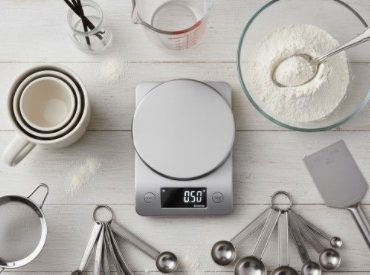
While measuring cups are convenient, they’re not always accurate. The most reliable way to ensure baking measurement accuracy is to measure by weight, using a digital kitchen scale.
For example:
- One cup of flour can weigh anywhere from 110g to 140g, depending on how it’s packed.
- A scale removes that variation, providing consistent results every time.
Professional bakers rely on weight for precision and scalability. Measuring by grams allows recipes to be multiplied or divided easily, ensuring perfect outcomes across different batch sizes.
Common Measurement Mistakes (and How to Fix Them)
Even experienced bakers make errors. Here are the most common measurement pitfalls, and how to avoid them.
1. Scooping Flour Directly from the Bag
This packs too much flour into the cup, making your baked goods dense. Always spoon and level.
2. Ignoring Ingredient Temperature
Butter, eggs, and milk should often be at room temperature. Measuring melted butter instead of softened can completely change texture and spread.
3. Mixing Up Similar Ingredients
Baking soda and baking powder are not interchangeable. Always double-check labels before measuring.
4. Using the Wrong Measuring Cup
Dry and liquid cups are designed differently for a reason. Using one for the other leads to small but significant inaccuracies.
5. Measuring Sticky Ingredients Incorrectly
Honey, molasses, and peanut butter tend to cling to cups. Lightly grease the measuring cup or spoon first for accurate volume and easy cleanup.
Understanding Ratios in Baking
Every baked product relies on specific ratios that define its texture and character. Once you understand these, you’ll appreciate why precise measurement is so essential.
- Cake Batter: Typically 1 part sugar, 1 part fat, 1 part eggs, and 1.5 parts flour.
- Cookies: Higher fat and sugar for chewiness.
- Bread: Roughly 5 parts flour to 3 parts water for strong gluten formation.
- Pastry Dough: 3 parts flour to 2 parts fat for flakiness.
Changing any ratio changes the chemistry. Precise measurement keeps these ratios intact, ensuring the intended result.
How to Convert Measurements Accurately
When following recipes from different regions, conversions matter. U.S. recipes often use cups, while European ones use grams. Converting accurately ensures baking measurement accuracy remains intact.
Common conversions:
- 1 cup flour = ~120 grams
- 1 cup sugar = ~200 grams
- 1 cup butter = ~227 grams
It’s best to use a scale with a conversion feature or a reliable chart. Avoid online calculators that round too aggressively, they can throw off delicate ratios.
The Role of Environmental Factors
Even perfect measurements can be affected by the environment. Humidity, altitude, and temperature influence ingredient behavior.
- Humidity: Moist air adds hidden moisture to flour and sugar, requiring slight adjustments.
- Altitude: Higher altitudes cause faster evaporation and gas expansion, demanding reduced leavening agents and sugar.
- Temperature: Cold butter behaves differently than room temperature butter, affecting creaming and structure.
Professional bakers often note environmental conditions alongside ingredient measurements to maintain precision.
The Science Behind Measuring Tools
To achieve true baking measurement accuracy, you must use the right tools, and know why they matter.
- Digital Scales: Provide gram-level precision, ideal for all ingredients.
- Measuring Cups (Dry and Liquid): Best for quick measurements in home baking.
- Measuring Spoons: Crucial for small quantities like salt, baking powder, and vanilla extract.
- Thermometers: Measure temperature accurately for yeast activation, chocolate tempering, and sugar syrups.
Using reliable, calibrated tools removes guesswork from your process and makes your baking results repeatable.
Measuring for Success: The Step-by-Step Approach
Here’s a simple, foolproof process to measure with precision every time:
- Read the Recipe Carefully: Check for special instructions like “sifted flour” or “packed brown sugar.”
- Gather Tools: Have measuring cups, spoons, and a scale ready.
- Measure Dry Ingredients First: Keep them separate to avoid early reactions.
- Measure Liquids at Eye Level: Precision starts with perspective.
- Double-Check Quantities: When in doubt, re-measure, it’s faster than fixing a ruined bake.
This routine, followed consistently, turns accuracy into habit.
The Professional Baker’s Secret: Scaling Recipes
Baker’s percentages are percentages of ingredients compared to the weight of flour used by professionals. An example of this is with 100 percent flour, 50 percent sugar and 60 percent water. In this system, scaling is precise and batches have a uniform texture.
It is an ideal example of how the accuracy of measurement in baking is not only a matter of numbers but also ratios and relationships that guarantee the perfection of the chemistry every time.
Teaching Accuracy: A Life Skill in Baking Education
Culinary schools emphasize measurement because it builds discipline and understanding. Students learn:
- How ratios create texture
- How mismeasuring affects structure
- How to adjust recipes scientifically
This foundation allows creativity later. Once you understand accuracy, you can confidently experiment, because you know how each adjustment will affect the outcome.
Baking Accuracy in the Digital Age
The accuracy is easier than ever due to modern technology. Smart kitchen scales have recipe apps that communicate with the scales and automatically change the ingredient ratios. Bakers are assisted by step-by-step instructions and computer timers in order to perform processes accurately.
Although AI-driven recipe websites also compute measurements to forecast the results of baking, this is a testament that accuracy is as new as it is old.
The Magic Is in the Measure
Baking may seem a magic thing, but it is accuracy which makes the magic. All the ideal loaf, flaky croissants and soft cupcakes are attributed to the strict measuring and proper ratios.
Learning how to be accurate in measurement when baking does not take away creativity, it gives it strength. When you have the science of the scoop, then you can be sure to make customizations in recipes, scale in production and come up with new ideas with the same consistent results which are always tasting.
The next time you pick up your measuring cup or your scale, keep in mind: it is all grams. Since precision is not merely a matter of adherence with instructions in the world of baking, it is about learning the art of delight.