
The science of sugar in baking goes far beyond sweetness: it’s the invisible architect behind tender crumbs, golden crusts, and days-long freshness that make every bite unforgettable.
Chemistry and art in baking sugar. Sugar helps in tenderness, moisture, volume, and color in a sequence of chemical reactions that determine the merits of any baked product. Learning how sugar will act in heat, how it will interact with other ingredients, and overall composition will be the key to baking.
Now, we are going to discuss the interesting science of sugar, its forms, its functions, and why it is one of the most potent ingredients in your pantry.
A Brief History of Sugar in Baking
The use of sugar in cooking dates back thousands of years, although its use in baking came into full flower in the 17th and 18th centuries when refined sugar became widely accessible in Europe. What used to be an exclusive possession of the royalties turned out to be one of the foundations of the sweet production among the masses.
With the advancement of ovens, and the transition of baking being hearthside to home, sugar became the center star- not only in terms of flavor, but also in its ability to make things change in terms of texture and beauty. The history of baking has been influenced by sugar, whether it is Victorian sponge cakes or the current macarons.
The Chemistry of Sugar: What It Really Is
At its core, sugar is a carbohydrate composed of carbon, hydrogen, and oxygen. But not all sugars are created equal.
- Sucrose: Table sugar, derived from sugarcane or sugar beets.
- Glucose: A simple sugar found in honey and fruit.
- Fructose: The sweetest naturally occurring sugar.
- Lactose: Milk sugar, found in dairy-based desserts.
- Maltose: Formed from starch breakdown, often used in breads.
Each type behaves differently under heat and moisture, affecting texture, flavor, and browning. In baking, choosing the right type for the right purpose is key.
Sweetness: The First and Most Obvious Function
Naturally, the best-known sugar purpose is to sweeten. But even this apparently innocent role has a touch of chemistry. The perception of sweetness is determined by the ability of the sugar particles to bind to the taste receptors in your tongue and various types of sugars have varying intensities.
For example:
- Fructose is about 1.7 times sweeter than sucrose.
- Glucose is about 0.7 times as sweet.
This implies the type but not quantity of sugar in a recipe will influence the balance of the whole. Bakers who are professionals tend to mix sugars to give it a subtle sweetness that may augment rather than bombard.
Sugar as a Tenderizer: The Texture Secret
Another of the minor sugar baking functions is that of producing tenderness. Sugar takes up the place of flour in the batter or dough that forms gluten, thus retarding the formation of gluten. Reduced gluten translates to a softer and more delicate texture.
This is the reason why cakes and cookies that have more sugar in them are tender, but breads (which are dependent on strong gluten) only have comparatively little. Sugar elevates the coagulation temperature of eggs and flour also, and lets batters rise further before setting, another cause of light and fluffy cakes.
Sugar and Moisture: The Hygroscopic Hero
Sugar is hygroscopic, which means that it draws and retains water molecules. This role prevents baked goods from going stale faster and makes them remain moist.
In a loaf cake or a muffin, the sugar has the ability to trap water vapor, and thus it would remain soft days later. A lack of sugar will cause moisture to evaporate rapidly causing the product to become dry and crumbly.
That is also the reason why lower sugar recipes tend to have shorter shelf life or have to be replaced with other substances such as honey or fruit puree in order to create the balance of moisture.
Sugar and Leavening: The Air Whisperer
Surprisingly, sugar is used in aeration particularly in the creaming process. Beating of sugar with butter allows the sugar to form small air holes in its crystalline structure. These pockets are increased by heat resulting in light textures in cakes and cookies.
The smaller the crystal of the sugar the smaller and more uniform the air pockets, the result is uniform, soft crumb. An example of this is powdered sugar; it does not trap air and that is the reason why it is used in icing and not creamed batters.
It is this interaction, which is simple mechanical in nature, which causes sugar to be a major ingredient in creating volume and structure, and not necessarily flavor.
Sugar and Browning: The Golden Reaction
Few sights are as mouthwatering as a perfectly browned cookie or golden loaf, and sugar is responsible for that transformation. The two main browning reactions are caramelization and the Maillard reaction.
1. Caramelization
When sugar is heated above 320°F (160°C), it begins to break down, forming complex flavor compounds that produce rich brown color and deep taste.
- Light caramelization = sweet and buttery flavor.
- Dark caramelization = bitter-sweet notes and aroma depth.
2. Maillard Reaction
This is a chemical reaction between sugars and proteins (like those in flour or eggs) that occurs when baking temperatures exceed 285°F (140°C). It’s what gives baked goods their characteristic golden hue and complex flavors.
Together, these reactions create the “baked” taste that defines everything from cookies to crusty bread.
Sugar and Volume: Expanding Horizons
Besides trapping gases in the air during creaming, sugar is used to regulate the viscosity of the batter and gas retention. A more viscous batter is able to retain more gas bubbles of the leavening agents to afford volume and stability.
In sponge cakes and meringues, sugar stabilizes whipped egg foams, by enhancing viscosity, so that they do not fall when baked. Foams fall flat or become rubbery without sugar as they tend to deflate very fast.
Even when it is invisible, the effect of sugar on volume is tremendous.
Sugar and Flavor Enhancement
Sugar does not only make things sweet, but it balances flavor. In baking, sugar balances out bitterness (in cocoa or coffee) and fruitiness, as well as balances acidity. It is even able to emphasize subtle references such as vanilla or spice.
For example:
- A pinch of sugar in bread dough enhances yeast fermentation and crust flavor.
- A touch of sugar in savory pastries adds complexity.
- In chocolate desserts, sugar softens bitterness and deepens cocoa richness.
This balance is why sugar is an essential seasoning in baking, one that enhances harmony in taste.
The Role of Sugar in Color and Presentation
The effect of sugar on color is realized before baking starts. It also affects the surface smoothness and the glazes, icings, and fondants when dissolved to affect the opacity. Granulated sugar sprinkles the tops of cookies, whereas powdered sugar gives the cookies a smooth dull look.
There is also the psychological use of color. The desserts with golden-brown color are a sign of warmth, richness, and quality. And that is why, knowing about sugar in baking is not only scientific, it is emotional. It makes a dessert look appetizing to look at.
Different Types of Sugar and Their Unique Roles
Each type of sugar brings its own chemistry to the table. Knowing when and how to use each one helps bakers craft perfect textures and flavors.
1. Granulated Sugar
The classic all-purpose sugar used in most recipes. Ideal for creaming and general sweetness.
2. Brown Sugar
Contains molasses, which adds moisture, chewiness, and deep flavor. Great for cookies and spice cakes.
3. Confectioners’ (Powdered) Sugar
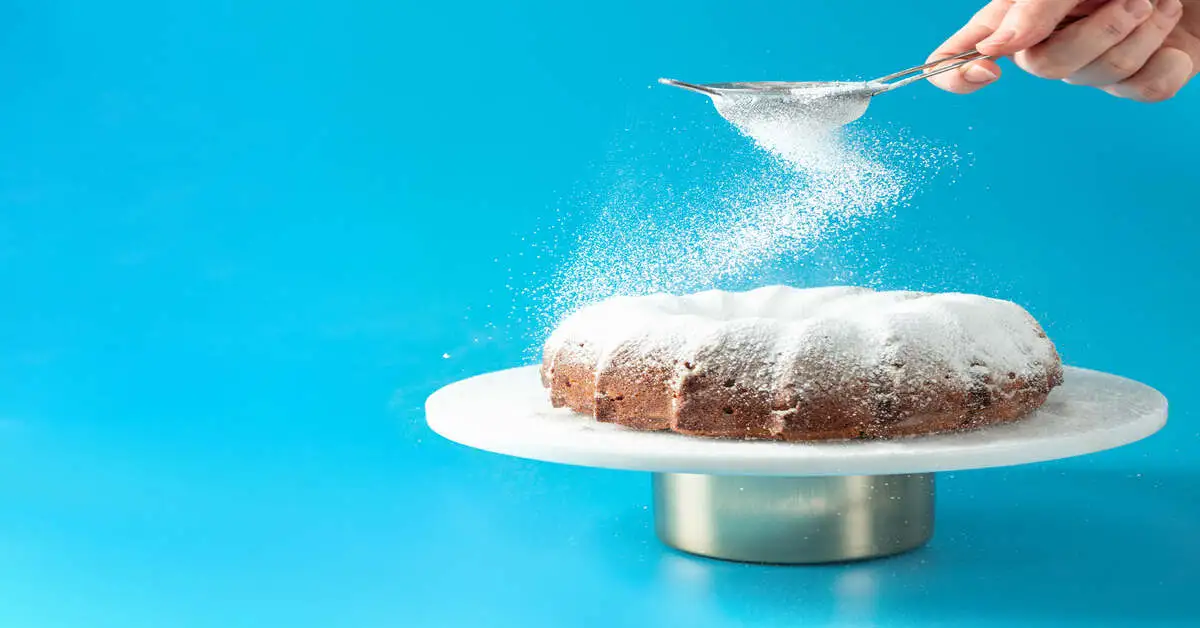
Finely ground with cornstarch to prevent caking. Best for frostings, icings, and dusting.
4. Turbinado and Demerara Sugar
Partially refined, with larger crystals and mild molasses flavor. Adds crunch and caramel notes.
5. Honey, Maple Syrup, and Agave
Liquid sugars that add moisture and distinct flavor. They also affect browning faster due to high fructose content.
6. Invert Sugar and Corn Syrup
Used commercially to prevent crystallization and extend freshness. Found in candies and glossy desserts.
Choosing the right sugar for the right purpose transforms your bake from good to exceptional.
Reducing Sugar: The Chemistry Challenge
Nowadays, people want to minimize sugar in the era of health-conscious baking. However, this is scientifically a challenge. Removal of sugar loses more than the sweetness, it changes structure, moisture and color.
Sugar substitutes like stevia, erythritol, or monk fruit don’t caramelize or retain moisture the same way. That’s why low-sugar recipes often require:
- Additional moisture (e.g., yogurt or applesauce)
- Extra binding (e.g., eggs or gums)
- Temperature adjustments for browning
Understanding these adjustments keeps sugar in baking balanced, healthier, yet still satisfying. Sustainable baking practices can guide healthier sugar alternatives.
Temperature Sensitivity: How Sugar Behaves Under Heat
Sugar reacts dramatically to temperature changes:
- 212°F (100°C): Dissolves completely in water.
- 230–250°F (110–120°C): Forms syrups for candy or frosting.
- 320°F (160°C): Begins caramelization.
- 350°F (175°C): Creates rich golden crusts.
These stages show why sugar isn’t a passive ingredient, it’s actively transforming as your bake progresses.
Sugar’s Relationship with Other Ingredients
Sugar doesn’t work alone, it collaborates chemically with others:
- With Flour: Competes for moisture, limiting gluten.
- With Eggs: Stabilizes proteins and foams.
- With Fat: Creates aeration during creaming.
- With Yeast: Provides food for fermentation and rise.
This interconnectedness makes sugar one of the most influential ingredients in baking chemistry.
Sugar and Preservation: Extending Freshness
Sugar is known to decrease the supply of moisture to support the growth of microbes because it is known to attract water. This causes it to be a natural preservative.
Sugar is used to preserve products such as jams to cookies by inhibiting spoilage. It further assists frozen desserts to have smooth texture by reducing freezing points which is a scientific advantage in ice cream and sorbet manufacturing.
Understanding the Sensory Experience
Sweetness is emotional more than it is chemical. Sugar causes the release of dopamine during the process in the brain, which makes one feel good and relaxed. This emotional response is one of the reasons that desserts make us happy in baking, it is specifically created to make us feel good.
Then in learning sugar in baking we are not only learning chemistry, but we are learning the happiness of humans.
Conclusion
Sugar is much more than a sweetener, it is a multitasking wonder that characterizes the chemistry, brilliance, and appearance of baked goods. In its tenderizing the crumbs, caramelizing the crusts, in its stabilising the foams, in its keeping the freshness, sugar is the core of the magic of baking.
Knowing how the science of sugar in baking works helps you to bake and be creative. You will know when to make an adjustment, when to try something new, and when the chemistry is working.
So the next time you sprinkle sugar on your batter you have to remember you are not only putting sugar in your cake. You are bringing into action one of the greatest changes nature can make: science into pleasure, a spoonful at a time.